
Slow progression. Support confident learning.
Myopia (short-sightedness) is increasing worldwide, especially in children. Our myopia management service focuses on early detection, accurate monitoring, and personalised treatment options designed to slow progression and protect eye health for the future.
- Child-friendly, evidence-led care
- Accurate monitoring using axial length
- Lifestyle guidance for modern screen habits
- Options including specialist glasses, contact lenses and Ortho-K
What is Myopia?
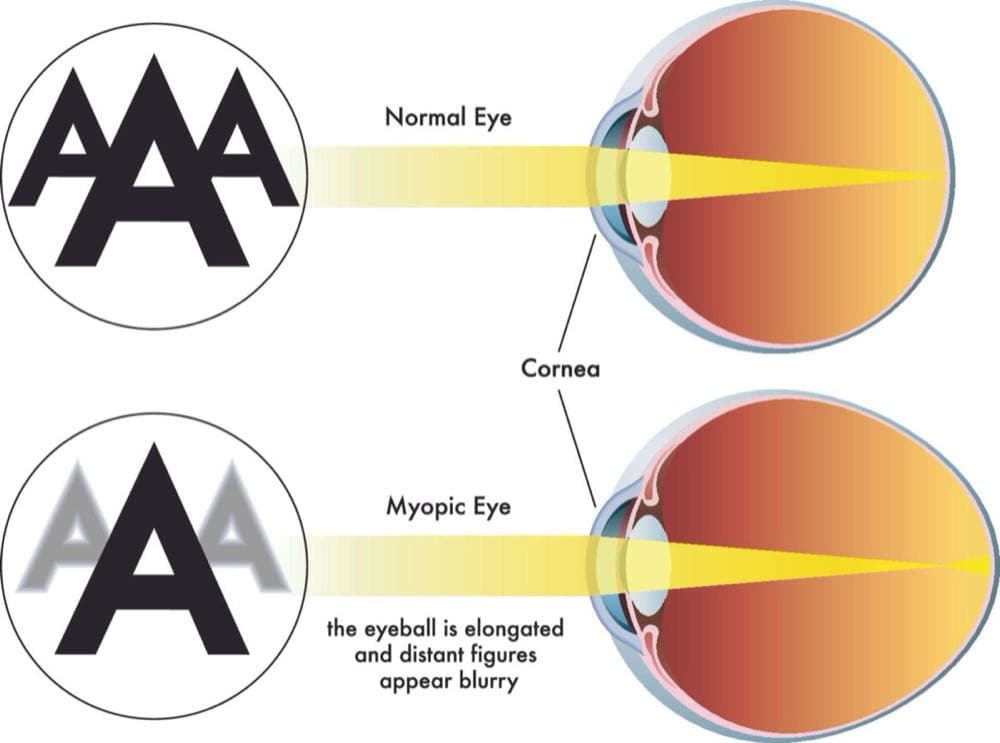
Myopia is short-sightedness your child can see clearly up close, but distance vision becomes blurry. This usually happens because the eye grows a little too long from front to back, meaning light doesn’t focus correctly on the retina.
Why early management is important
Because higher myopia can carry higher lifetime risk.
For many children, myopia can be corrected easily with glasses or contact lenses. The concern is progression. Higher levels of myopia are linked with increased risk of later-life eye conditions such as retinal detachment, glaucoma, cataract and myopic macular degeneration.
Who is at Risk?
Genetics matters but lifestyle now affects everyone.
Short-sightedness often runs in families. A child’s risk is commonly estimated at around one in three if one parent is myopic, rising to around one in two if both parents are myopic.
But family history isn’t the whole story. Modern lifestyles are playing a major role. Global prevalence is estimated to have reached around 34% in 2020, and projections suggest about 50% of the world’s population could be myopic by 2050, with high myopia approaching 10%.
How we test for Myopia
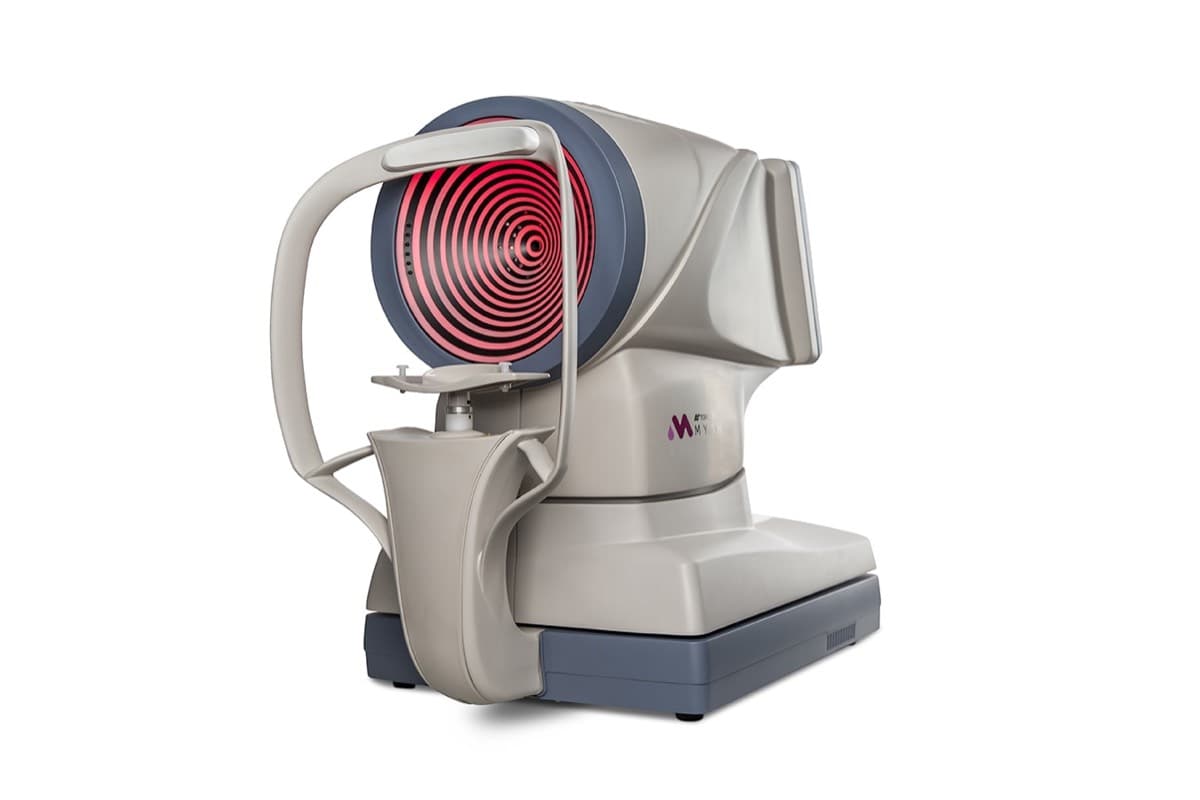
To track myopia properly, we need to measure how the eye is growing — not just how the prescription changes. That’s why we’ve invested in advanced technology using the MYAH Biometer, which helps us to accurately measure axial length of the eye and compare changes over time using built-in growth data.
This gives us a clearer, more reliable picture of progression and helps guide the best management plan for your child.
Personalised choices based on age, rate of change and lifestyle.
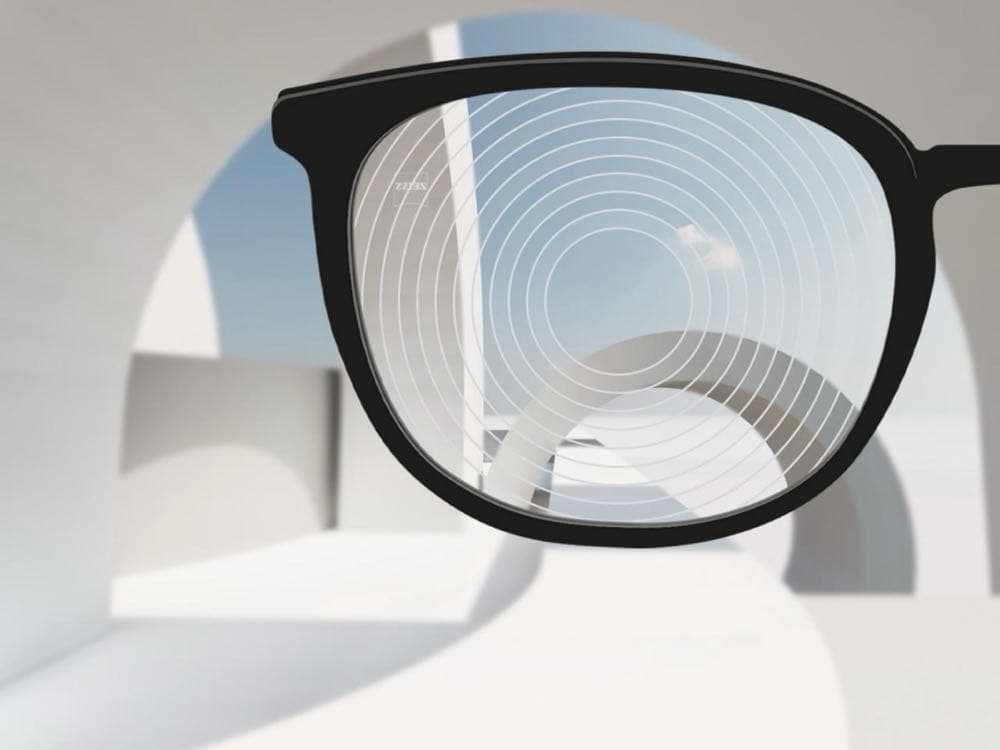
Myocare
Myopia Management lens designs can slow progression for some children while delivering clear everyday vision.
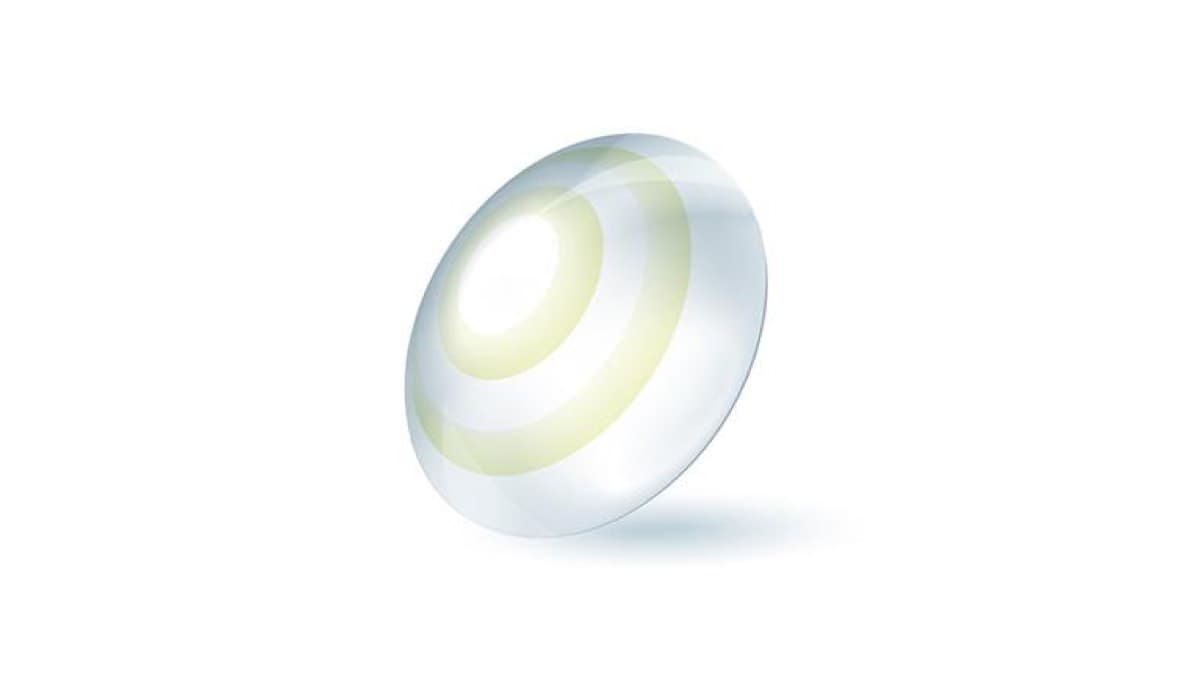
MiSight
Designed to correct vision and help reduce the rate of progression, with options tailored to wearing comfort and routine.
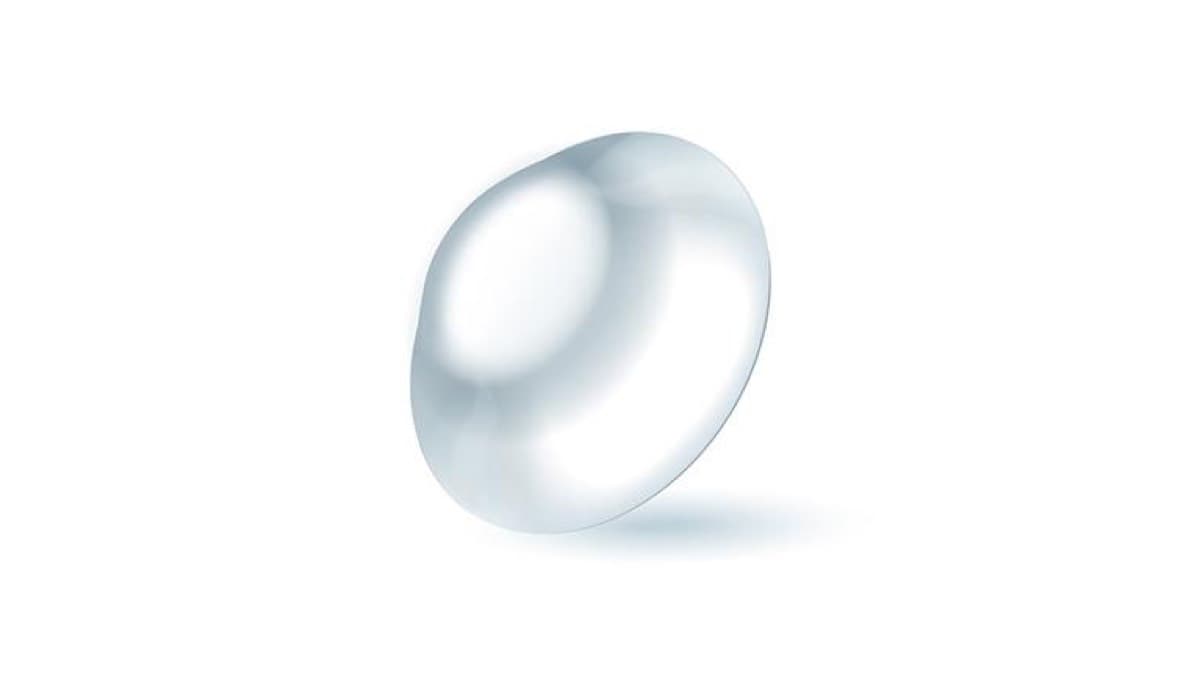
Nocturnal
Night-time lenses that provide clear daytime vision and can be a strong option for suitable children and teens who want freedom from daytime glasses.
Lifestyle changes that can help
Small habits can make a meaningful difference.
We’ll support you with practical, realistic changes that fit modern family life. The goal isn’t to remove screens, it’s to create healthier balance.
- More outdoor time – a well-established protective factor in childhood myopia
- Reducing prolonged screen sessions
- Frequent breaks during near work (reading, tablets, homework)
Frequently Asked Questions
Got more questions? Contact us.
How do I know if my child might be short-sighted?
Look for squinting, headaches, sitting closer to screens, or struggling to see the board at school.
Is myopia getting more common?
Yes. Global estimates suggest around 34% in 2020 with projections around 50% by 2050.
If I’m short-sighted, will my child be too?
Family history increases risk. Common estimates suggest about 1 in 3 risk with one myopic parent and about 1 in 2 if both are myopic.
Why measure axial length?
Because it tracks eye growth directly, offering a more accurate way to monitor progression than prescription changes alone.
What age should we start monitoring?
If you have a family history or notice early signs, it’s worth checking sooner rather than later. We’ll advise the right follow-up schedule for your child.
Protect their vision as they grow
Book a myopia assessment and get a plan tailored to your child.